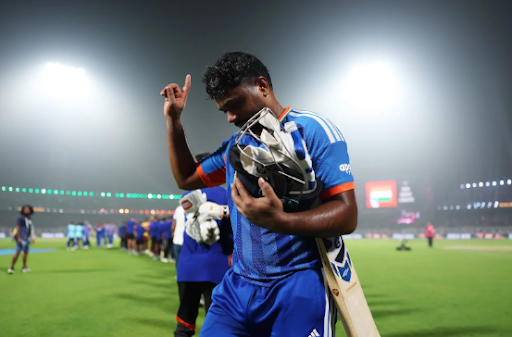
There are countries where sport drops into people’s lives a few times a year. Then there’s India, where a big match day reshapes the whole rhythm of things. Streets don’t exactly empty, but they move differently. Conversations bend around the same topic. Screens appear in places that usually don’t have screens. And somewhere in all of that, someone is refreshing a scorecard on their phone every thirty seconds, following cricket live india while pretending to do something else.
From the outside it can look like noise. From the inside it’s a very specific kind of focus.
Morning: everyone already knows the script
On the day of a big game – a World Cup clash, an India–Pakistan encounter, an IPL final – the match has already started long before the first ball.
Tea stalls are taking early predictions. Office WhatsApp groups are full of memes and “today by how much?” debates. People who usually don’t care about powerplay fielding suddenly have opinions about who should open.
It’s not serious analysis, and it doesn’t need to be. The point is that everyone is playing the same game: guessing how the story will go. If the toss is at 1:30, people are checking their phones at 1:29 as if their lives depended on who calls heads or tails.
Workdays with a match in the middle
India doesn’t simply shut down for cricket, no matter what the stereotype says. Offices are open, traffic is heavy, deadlines still exist. But they all bend a little.
Meetings mysteriously get scheduled away from the first over and the death overs. Laptops quietly carry an extra tab. The guy who usually never leaves his desk is suddenly “getting some tea” just as a key batter reaches 90.
This isn’t about disrespect for work. It’s about how far people will stretch their ordinary day to not miss the extraordinary bits. A lot of fans don’t watch every ball. They watch moments: the start, a crucial review, a tricky chase, the last over. Live scores and streams make those moments easier to catch without throwing the whole day away.
The second screen is no longer “second”
On TV, the classic scene was a crowded room around one screen, everyone hooked to the same feed. That still exists. But now, even in those rooms, phones are out.
One friend is tracking win probability. Another is tweeting through every misfield. Someone is sending voice notes into a family group for relatives who can’t watch. A cousin abroad is following along entirely via texts, reacting on the other side of the world a few seconds after the actual event.
It looks chaotic. But people can handle more parallel streams than they admit. They watch the replay on TV, check the scorecard on the phone to see how much the over cost, read a hot take on social media, and then settle back in – all in the space between balls.
At home, the sport rearranges furniture
Not every big game turns into a party. Sometimes it’s just a family that quietly rearranges the evening to keep the TV free.
The usual soap is skipped. Dinner shifts 30 minutes earlier or later. Kids who normally fight for cartoons negotiate to bowl “just five overs” in the corridor during the innings break. Someone who doesn’t care about cricket at all has to shout “boundary!” from the kitchen whenever the crowd noise spikes.
In a lot of middle‑class homes, the TV is still the main anchor. But it is no longer the only one. Plenty of matches now live entirely on phones and cheap smart TVs in bedrooms, with one earbud in so as not to disturb sleeping parents.
Outside, the game has its own geography
Walk through a city during a tight finish and you’ll see where the real viewing economy is.
- A mobile shop has ten people pressed against its window, watching a tiny screen on mute.
- A chai stall has dragged a TV out and pointed it towards the street.
- Security guards huddle around one phone in a parking lot.
- A metro platform is full of people staring at devices, reacting in perfect sync to something invisible to passers‑by.
You don’t need to see the ball to know what’s happening. The noise is enough. A low, collective “oooof” after a dropped catch. Sudden silence after a wicket. That half‑second of breath before a DRS decision.
Wins, losses, and the weird quiet afterward
Victory in a big game is not subtle. Car horns, fireworks, slogans, strangers high‑fiving strangers. Someone leans all the way out of a car window waving a flag they probably had ready for days. In some neighbourhoods you can literally follow the sound of celebration from one area to another like a map.
Losses are stranger. There’s no polite applause for the opposition. There’s a sort of embarrassed deflation instead. Chats that were bouncing every ball go silent. TVs get switched off mid‑presentation. The city stops talking about the game almost instantly, then starts again 12 hours later with post‑mortems and blame.
Underneath all of this is the same fuel: people cared enough for it to hurt.
Why this still works in the age of endless content
With so many things competing for attention – streaming shows, social platforms, games, short video – it’s fair to ask why live sport, and cricket in particular, still cuts through like this.
Part of the answer is structure. A match has a clear beginning, middle and end, and you can’t binge it in advance. It resists the “play next episode” instinct. It demands that you show up when it happens or miss the real heat of it. That alone gives it a weight that on‑demand entertainment rarely has.
Another part is the shared script. Millions of people know exactly what it means when a team needs 6 off 2 or a bowler is about to start the last over with just one wicket in hand. That common understanding turns every living room, bus, shop, and office into a potential viewing space. You don’t have to explain the stakes; everyone already feels them.
The phone quietly became the main stadium seat
It’s easy to romanticise packed grounds and giant TVs, and they’re still powerful. But for a lot of Indians, the main way of experiencing cricket now is on a five‑ or six‑inch screen.
That doesn’t cheapen the sport. It just makes it more personal. The same device that carries work emails, family photos and bank apps also carries the match, always a few taps away. The barrier to entry has shrunk to almost nothing.
So on any given day, during any live cricket match, there’s a good chance someone is watching in a place and in a way that would have looked strange fifteen years ago: in a stairwell, in the back of a rickshaw, under a desk, leaning against a pillar in a mall. They don’t need a perfect setup. They just need to not miss the next ball.
And that, more than slogans or ads or big promos, is probably why cricket’s hold in India still feels so strong. It isn’t just a show people tune into. It’s a rhythm they fit, somehow, into whatever life they’re already living.